Ultimate Guide to Mindfulness for Women: Find Calm, Confidence & Joy
Let's be honest. The idea of sitting cross-legged in perfect silence, completely emptying your mind, feels about as realistic as finding a clean, matching pair of socks in the laundry basket on a Tuesday morning. It's a nice image, but for most women I know, it's pure fantasy. Our minds are never empty. They're running logistics for the family, replaying a tough work conversation, worrying about a friend, and wondering what to make for dinner—all at the same time.
That's why the classic portrayal of mindfulness often feels out of reach. But what if I told you that mindfulness for women isn't about stopping your thoughts or adding another item to your already overflowing to-do list? It's not another thing you have to be perfect at.
At its core, mindfulness for women is simply the practice of noticing what's happening right now, in your body and mind, without immediately judging it or needing to fix it. It's hitting the pause button on autopilot. It's taking one conscious breath before you snap at your kids. It's feeling the warm water on your hands while doing dishes instead of mentally writing tomorrow's presentation. It's a radical act of coming back to yourself.
This isn't just fluffy self-help talk. The science is solid. Research from places like the American Psychological Association consistently shows mindfulness reduces stress, anxiety, and rumination (that exhausting loop of negative thoughts)—things women are statistically more prone to experience. It can improve sleep, focus, and even how we relate to our bodies.
But here's my personal take, after years of fumbling with this practice: the biggest benefit of mindfulness for women isn't stress reduction. It's clarity. It's the space to hear your own voice again, underneath the noise of expectations and obligations.
Why Mindfulness Hits Different for Women
We can't talk about mindfulness for women without acknowledging the unique landscape we navigate. It's not that men don't get stressed, but the sources and societal wiring are often different.
Think about the mental load. It's that invisible, ceaseless project management of home and family life. The remembering of dentist appointments, the noticing when the milk is low, the emotional tuning-in to everyone's moods. This constant cognitive labor is a prime candidate for mindfulness because it happens almost entirely on autopilot, draining our energy without us even realizing it.
Then there's the empathy gap. Women are often socialized to be caretakers and emotional buffers. We absorb the stress of others, which can leave us feeling like a sponge that's never wrung out. Mindfulness teaches us to feel empathy without absorbing the toxicity. It helps us recognize, "This is your feeling, and that is my feeling. I can care for you without letting your storm become my internal weather."
And let's talk about our relationship with our bodies. From a young age, many women are taught to view their bodies as projects to be managed, judged, and improved. Mindfulness offers a way out of that constant critique. It's about feeling the strength in your legs as you walk, the rhythm of your breath, the simple fact of being alive in this skin. It's a shift from appearance to sensation.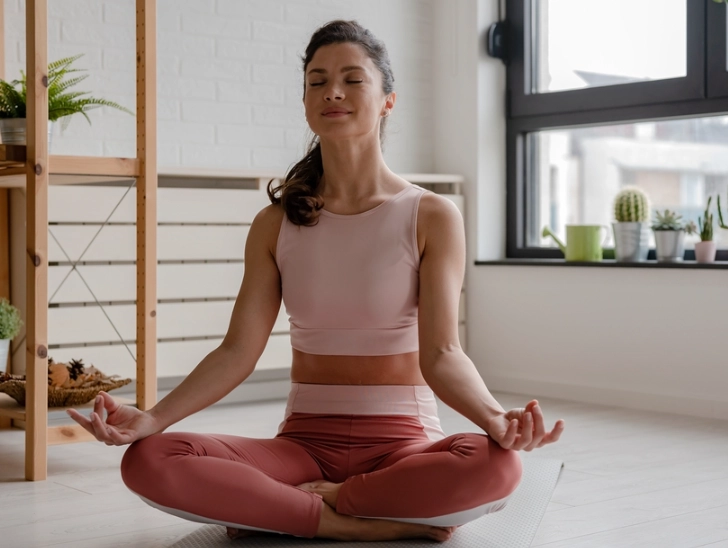
So, if the traditional, monastic version of mindfulness doesn't fit, what does a practical, integrated mindfulness for women look like?
Your No-Guilt, Real-Life Mindfulness Toolkit
Forget the 30-minute silent sits (unless you love them, then go for it!). Sustainable mindfulness for women is woven into the fabric of your existing day. It's micro-moments of awareness. Here are techniques that actually work when life is loud.
Mindful Anchors: Your Secret Pause Buttons
An anchor is a simple, physical sensation you return to throughout the day to ground yourself. It's your personal reset button.
- The Feet Anchor: Several times a day, just feel your feet on the floor. Whether you're in heels, sneakers, or barefoot, notice the pressure, the contact. Are they warm or cool? This takes 3 seconds and literally grounds you.
- The Breath Anchor (The Practical Version): Don't try to breathe deeply. Just notice one full breath. In... and out. That's it. Do this before you open a new email, before you answer a call, while you're waiting for the microwave. One conscious breath is a revolutionary act.
- The Sensory Anchor: Pick a routine activity and fully experience it with one sense. Drink your morning coffee and just taste it. Feel the warmth of the shower water on your shoulders. Listen to the specific sounds outside your window for 30 seconds.
These aren't meditations. They're sanity-saving glances back to the present moment.
Turning Daily Routines into Practice
This is where mindfulness for women becomes a superpower. You don't need extra time; you need to repurpose the time you already have.
Mindful Commuting: Instead of doomscrolling or replaying arguments, look out the window. Really see the trees, the buildings, the sky. Notice five different colors you see. If you're driving, feel your hands on the wheel, notice the sensation of moving.
Mindful Chores: I know, it sounds ridiculous. "Be mindful while scrubbing the toilet?" Hear me out. Pick one chore a week to do mindfully. For me, it's folding laundry. I feel the textures of the fabrics, notice the colors, and focus on the simple, rhythmic motion. It becomes almost soothing, a break from mental chatter. The other chores? Do them on autopilot, guilt-free.
Mindful Listening: In your next conversation, try to listen with your full attention. Notice the urge to interrupt, to plan your response. Just gently bring your focus back to the sound of the other person's voice, their facial expressions. This single practice can transform relationships.
Pro Tip: Start with just ONE of these anchors or routines for a week. Don't overhaul your life. Master the one-minute breath anchor before you try anything else. Consistency beats duration every single time.
Navigating the Emotional Waves: Mindfulness When It's Hard
Anyone can be mindful when they're calm. The real test is when emotions run high. This is where mindfulness for women moves from a nice-to-have to a crucial life skill.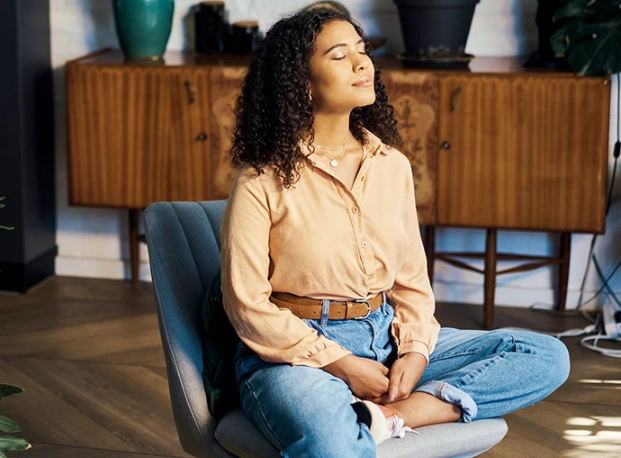
Let's say frustration is bubbling up. The old pattern might be to react instantly (snap, yell, shut down) or to suppress it (smile and seethe inside). Mindfulness offers a third way: the pause.
- Name It to Tame It: Mentally whisper, "Frustration is here." Or "I'm feeling overwhelmed." This simple act creates a tiny bit of space between you and the emotion. You are not the frustration; you are the one noticing it.
- Feel It in the Body: Where do you feel this emotion physically? A tight chest? Clenched jaw? Hot face? Just bring curious attention to those sensations for 20 seconds. Don't try to change them. Often, just feeling them fully allows them to shift on their own.
- Breathe With It: Take three breaths, imagining you're breathing into that tight area. On the exhale, just let go a little.
- Then Choose: Now, from that slightly calmer space, decide how to respond. Maybe you still need to set a boundary or express yourself, but it will come from a place of clarity, not raw reaction.
This isn't about becoming a passive doormat. It's about responding from your values, not your triggers. It's powerful.
Common Hurdles (And How to Actually Get Past Them)
I've hit every single one of these. Let's troubleshoot.
"I don't have time." This is the biggest one. My answer? You don't have time not to. Those 30 seconds of taking a conscious breath can save you 30 minutes of spinning in anxiety later. Start with micro-moments attached to existing habits: one breath before you check your phone in the morning, 10 seconds of feeling your feet when you stand up from your desk.
"My mind won't stop. I'm bad at this." A wandering mind is not a failure; it's the default setting of the human brain. The practice IS the noticing and gently returning. Every time you notice you're lost in thought and come back, that's a bicep curl for your attention muscle. You're doing it right.
"It makes me more anxious to sit with my thoughts." This is important. If you have a history of trauma or severe anxiety, diving straight into silent meditation can be destabilizing. Focus on external anchors first: sounds, sights, physical movement. Resources from the Mindful.org community often have great guidance for this, and consulting a therapist trained in mindfulness-based approaches can be incredibly helpful.
"I keep forgetting to do it." So do I! Use triggers. Put a sticky note on your computer monitor that says "BREATHE." Set a gentle, non-judgmental phone reminder for 3 PM that just says "Pause." Link your practice to a daily cue like drinking water or waiting for a webpage to load.
Mindfulness Across Different Life Stages
The practice of mindfulness for women adapts and changes, just as we do.
| Life Stage/Scenario | Core Challenge | Mindfulness Focus |
|---|---|---|
| Motherhood (Young Kids) | Fragmented attention, sensory overload, loss of self. | Sensory anchors with kids (notice their smell, the feel of their hand). Mindful moments in the chaos (3 breaths while they cry). Self-compassion for the "not enough" feeling. |
| Career Building/Leadership | Imposter syndrome, constant demands, workplace dynamics. | Mindful listening in meetings. The "feet on floor" anchor before speaking. Noticing and dis-identifying from critical self-talk. |
| Perimenopause/Menopause | Unpredictable body changes, sleep disruption, societal invisibility. | Body scan to connect with changing sensations without judgment. Mindfulness for sleep (focusing on breath to quiet night-time anxiety). Radical acceptance of a new phase. |
| Empty Nest/Caregiving | Identity shift, grief, constant worry for others. | Loving-kindness meditation for self and those you care for. Mindful walking in nature. Using mindfulness to be fully present with an aging parent, rather than lost in future fears. |
The thread running through all of these? Kindness. Mindfulness without self-compassion is just another form of harsh discipline. The goal isn't to be a perfect, zen-like being. It's to be a more present, less reactive, and more compassionate human—especially toward yourself.
Your Mindfulness for Women Questions, Answered
Let's tackle some of the specific questions that might have brought you here.
Is mindfulness for women different from general mindfulness?
Yes and no. The core mechanics are the same: attention and awareness. But the application often needs to account for women's specific social conditioning, hormonal cycles, and common life stressors. A program designed for women might spend more time on topics like emotional labor, body image, or integrating practice into caregiving roles. Organizations like the Harvard Health Publishing often discuss these nuances in their wellness articles.
I'm always multitasking. Isn't that the opposite of mindfulness?
Absolutely. Our brains aren't wired to truly multitask; they switch tasks rapidly, which is inefficient and draining. Mindfulness is the antidote: single-tasking. Try this experiment: for one 20-minute block, work on one thing with your phone in another room. Notice the resistance, then notice the depth of focus you can achieve. It's a revelation.
Can mindfulness help with hormonal mood swings or PMS?
It can be a powerful tool. By learning to observe your moods and physical sensations with curiosity rather than panic or frustration, you create space. You learn to say, "Ah, this is the irritable, sensitive part of my cycle. This will pass." It doesn't take the discomfort away, but it can prevent you from being swept away by it. Research, including some referenced by the National Institutes of Health (NIH), has explored mindfulness-based interventions for menstrual and premenstrual distress with promising results.
How do I know if I'm making progress?
Forget about achieving a blank mind. Look for these subtle signs:
- You catch yourself taking a deep breath in a stressful moment before you react.
- You notice a beautiful cloud formation on your way to work.
- You feel the urge to check your phone but decide to just look out the window instead.
- You hear a critical thought about your body and think, "Huh, there's that old story again," without fully believing it.
These are the real victories. Progress in mindfulness for women is measured in moments of awareness, not hours on a cushion.
So where do you start? Right now. Don't wait for the perfect time, the quiet room, the special cushion.
Put down your phone.
Feel your body in the chair. Notice the points of contact.
Take one full breath. In through your nose, out through your mouth.
That's it. You just practiced mindfulness. The journey of a thousand moments of peace begins with a single, conscious breath. And that is something you can always come back to, no matter how chaotic life gets. This is the true, accessible power of mindfulness for women. It's not about escaping your life. It's about fully inhabiting it.
POST A COMMENT