Dialectical Behavior Therapy: A Practical Guide to Skills for Emotional Regulation
Let's be honest. Sometimes feelings don't just visit; they crash through the door, trash the place, and refuse to leave. You might know this as anxiety that freezes you, anger that burns everything in its path, or a sadness so heavy it feels impossible to move. If your reaction to these emotional tsunamis has been to either explode or completely shut down, you're not broken. You just might not have the right tools. That's where dialectical behavior therapy comes in.
Developed in the late 1980s by psychologist Marsha Linehan, DBT was originally designed to treat Borderline Personality Disorder (BPD), a condition marked by extreme emotional instability. But here's the thing Linehan discovered: the skills she was teaching? They worked for everyone who struggled with regulating their emotions. Today, DBT is used for depression, anxiety, PTSD, eating disorders, and just plain old life stress. It's not about getting rid of emotions. It's about learning to surf them instead of drowning.
What You'll Learn in This Guide
What Exactly Is DBT (And What Does "Dialectical" Even Mean)?
DBT is a type of cognitive-behavioral therapy. But it has a secret sauce: the word "dialectical." It sounds academic, but the idea is simple. A dialectic is when two opposite things can be true at the same time. In DBT, the core dialectic is acceptance and change.
Most of us get stuck in one or the other. We either beat ourselves up for feeling bad (all change, no acceptance) or we wallow in misery, believing nothing can be different (all acceptance, no change). DBT says both are necessary. You must radically accept your reality and your emotions as they are in this moment—AND you must work to change behaviors that aren't serving you.
Think of it like this: You're stuck in quicksand. Panicking and thrashing (trying to force change without acceptance) makes you sink faster. Giving up and accepting you'll die there (acceptance without change) is the end. The DBT way? First, accept you're in quicksand. Stop thrashing. That's radical acceptance. Then, slowly lean back and spread your arms to increase surface area. That's the skillful change. Both steps are crucial.
This philosophy is woven into four skill sets, taught in a specific order for a reason.
The Four Core Modules: Your DBT Skill Toolkit
DBT skills are taught in groups, usually over 24 weeks, cycling through these modules. You learn them in this order because each one builds a foundation for the next. Trying to negotiate a relationship (module 4) when you're in emotional crisis is like building a house on sand. You need the foundation first.
1. Mindfulness: The Bedrock Skill
This isn't just meditation. In DBT, mindfulness is the practice of being fully present and aware, without judgment. It's the skill of observing your thoughts and feelings like clouds passing in the sky, instead of being the sky itself. The goal is to get you out of "emotion mind" (hot, reactive, ruled by feelings) or "reasonable mind" (cold, analytical, detached) and into "wise mind"—the sweet spot that integrates both.
What you actually do: The "what" and "how" skills. You practice observing, describing, and participating (the "what"). And you do it non-judgmentally, one-mindfully, and effectively (the "how"). A simple practice? For one minute, just describe what you see around you without adding a label like "ugly" or "messy." Just "the blue mug," "the sound of traffic." It's harder than it sounds.
2. Distress Tolerance: Surviving a Crisis Without Making It Worse
This is the 911 module. When you're in acute pain—a panic attack, a wave of suicidal thoughts, an urge to self-harm—the goal isn't to feel better. It's to get through it without doing something that creates more problems. DBT is brutally pragmatic here.
Key Skills:
- STOP: Stop, Take a step back, Observe, Proceed mindfully. It's a circuit breaker for impulsive action.
- TIPP: Change your body chemistry. Temperature (ice on face), Intense exercise, Paced breathing, Paired muscle relaxation. It works shockingly fast.
- Distract with ACCEPTS: Activities, Contributing, Comparisons, Emotions (opposite), Pushing away, Thoughts, Sensations. A list of ways to temporarily shift focus.
People often dismiss these as "avoidance." But that's a misunderstanding. You can't process trauma when you're drowning. Distress tolerance is about getting to the life raft first.
3. Emotion Regulation: Reducing Vulnerability and Changing Unwanted Emotions
Now we move from crisis survival to prevention. This module teaches you how to make yourself less susceptible to emotional storms in the first place, and how to gently shift emotions that are hanging around too long.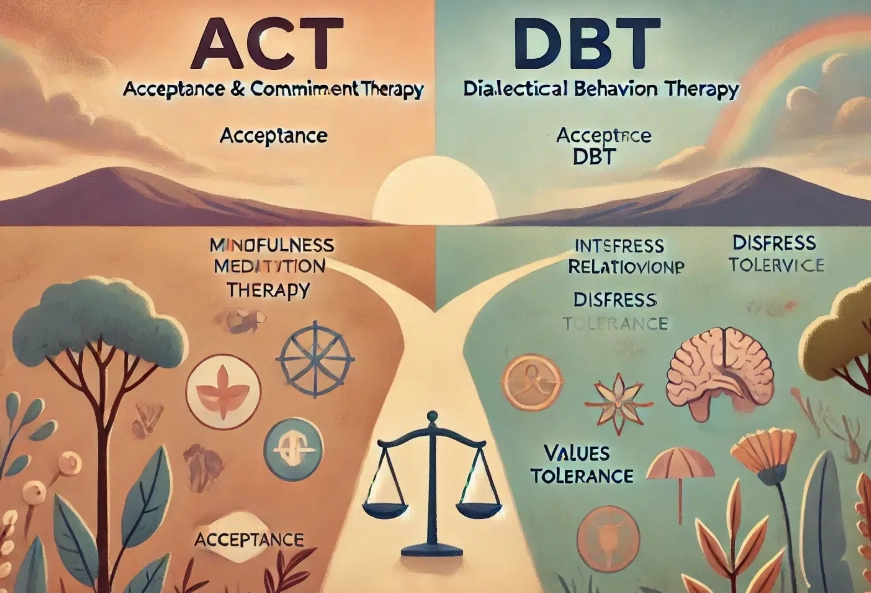
| Skill Area | Key Question | Example Action |
|---|---|---|
| Reduce Vulnerability | Am I taking care of my body? | Follow the PLEASE acronym: treat Physical iLlness, balance Eating, avoid mood-Altering drugs, balance Sleep, get Exercise. |
| Increase Positive Events | What small thing can I schedule for joy? | Build mastery by doing one thing each day that makes you feel competent. Schedule an activity you enjoy, even for 10 minutes. |
| Opposite Action | Is my emotion not fitting the facts? | If you feel like isolating from sadness, call a friend. If you feel angry and want to attack, gently avoid the person. |
The most overlooked part? The PLEASE skills. I've seen clients work hard on mindfulness but ignore their chronic sleep deprivation. You can't meditate your way out of the emotional volatility caused by exhaustion.
4. Interpersonal Effectiveness: Asking for What You Want and Saying No
This is where it all comes together. How do you communicate your needs, set boundaries, and maintain relationships while keeping your self-respect? DBT breaks it down with surgical precision.
The DEAR MAN skill is famous for a reason. It's a script for making requests or saying no:
- Describe the situation factually.
- Express your feeling/opinion.
- Assert your request clearly.
- Reinforce (explain the positive outcome).
And you do it with:
- Mindfulness (stay on topic).
- Appear confident.
- Negotiate.
The trick most people miss? You have to choose your priority. Is your objective getting the request met? Maintaining the relationship? Or keeping your self-respect? You often can't maximize all three. Knowing which one is non-negotiable for you in a given interaction changes your entire approach.
Where People Get Stuck: Common Mistakes in Practicing DBT
After years of seeing people try to adopt these skills, I notice patterns. The failure is rarely in the skill itself, but in the application.
Mistake 1: Using the skills to suppress emotions, not regulate them. The goal of opposite action isn't to pretend you're not angry. It's to act opposite to the anger's urge (to attack) while still acknowledging the feeling inside. You're changing the behavior, not gaslighting yourself.
Mistake 2: Jumping straight to Interpersonal Effectiveness without the foundation. Trying a DEAR MAN script when you're already in emotion mind is a recipe for disaster. Your tone will be off, you'll get defensive, and you'll blame the skill for "not working." You must use your mindfulness and distress tolerance skills to get to wise mind first.
Mistake 3: Giving up on a skill because it felt awkward the first time. These are skills, like learning to play guitar. The first time you try paced breathing, your mind will wander a hundred times. The tenth time, it might wander ninety times. That's progress. The awkwardness is a sign you're learning, not that it's wrong.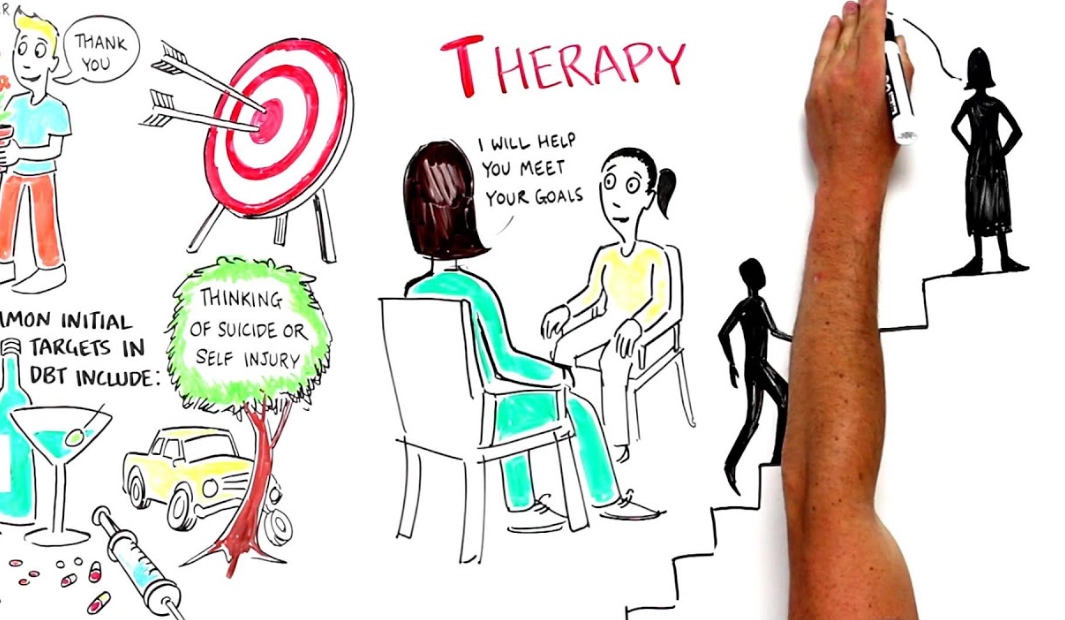
How to Actually Start Using DBT Skills in Your Life
You don't need to be in a full DBT program to benefit. Start small and concrete.
Week 1-2: Build Awareness. Pick one mindfulness "what" skill—maybe "Describe." Twice a day, pause for 60 seconds and describe your surroundings or an internal sensation without judgment. Just practice noticing.
Week 3-4: Learn a Crisis Tool. Memorize the TIPP skill. Write it on a card. The next time you feel a surge of panic or rage, don't try to think. Just run through the steps: Cold water on the face. 20 jumping jacks. Breathe 4-4-6. See what happens.
Week 5-6: Regulate Your Body. Audit your PLEASE skills. Are you eating regularly? How's your sleep? Pick one area to adjust slightly. Going to bed 30 minutes earlier is a more powerful emotion regulation strategy than most people realize.
For structured learning, the gold standard is Marsha Linehan's official DBT Skills Training Manual. For a more accessible entry, workbooks like The Dialectical Behavior Therapy Skills Workbook by McKay, Wood, and Brantley are excellent. The American Psychological Association and Dr. Linehan's Behavioral Tech LLC website are authoritative sources for understanding the therapy's foundations.
If your struggles are severe—especially with self-harm or suicidal thoughts—please seek a qualified DBT therapist. The full treatment includes individual therapy for motivation and coaching for applying skills in real-time, which is irreplaceable for complex issues.
Your DBT Questions Answered
Can I learn DBT skills on my own without a therapist?
You can learn the concepts and practice many DBT skills independently through workbooks or online courses. Skills like mindfulness or the STOP skill for crisis management are designed for self-application. However, for issues like chronic suicidal thoughts, self-harm, or severe Borderline Personality Disorder (BPD), the full DBT protocol includes individual therapy and phone coaching. A common mistake is trying to use the interpersonal effectiveness skills from a workbook in a high-stakes relationship conflict without prior coaching; it often backfires because the delivery is off. Starting with a workbook for skill acquisition, then seeking a therapist for application to deep-seated patterns, is a more effective path.
How is DBT different from regular talk therapy or CBT?
Standard talk therapy often explores the 'why' of your feelings. DBT is less about why you feel terrible and almost entirely about 'what to do about it right now.' It's a problem-solving therapy. Compared to traditional Cognitive Behavioral Therapy (CBT), DBT places a much heavier emphasis on acceptance. CBT might challenge a thought like 'I'm a failure.' DBT would first validate the pain behind that thought ('It makes sense you feel that way given your history'), then teach a skill to tolerate the distress of that feeling, and finally, perhaps, look at balancing the thought. This dialectic of acceptance AND change is the engine. Most people need the validation before they have the mental space for change.
What's the most practical DBT skill I can use today during a panic attack or anger surge?
Use the TIPP skill from the distress tolerance module. It works by changing your body chemistry to short-circuit the emotional crisis. TIPP stands for: Temperature (splash ice-cold water on your face, or hold an ice pack to your cheeks or wrists), Intense Exercise (do 20 jumping jacks right now, run in place for 60 seconds), Paced Breathing (breathe in for 4 counts, hold for 4, out for 6), and Paired Muscle Relaxation (tense muscle groups as you breathe in, release as you breathe out). The temperature change triggers the mammalian dive reflex, slowing heart rate. The exercise burns off stress hormones. It's a physiological reset button. Don't think about it, just do it. The analysis can come later.
DBT isn't a magic cure. It's a set of tools. Some will fit your hand perfectly; others will feel clunky. The point is to build your own toolkit, so when the next emotional storm hits, you're not standing there empty-handed. You have a plan. You have a skill. You can ride it out.
POST A COMMENT