Quick Guide
- Why Bother? The Tangible Power of Shared Experience
- The Landscape: What Kinds of Support Groups for Women Are Out There?
- Okay, I'm Interested. How Do I Actually Find One of These Groups?
- Choosing the Right Group: Your Personal Checklist
- What Happens Now? Joining and Participating
- Navigating the Unspoken Questions: Your FAQ
- A Few Important Realities and Cautions
Let's be honest for a second. Life can throw some seriously heavy stuff our way. A health diagnosis that knocks the wind out of you. The gut-wrenching grief of losing someone. The quiet, persistent anxiety that feels like a constant hum in the background. Or maybe it's just the overwhelming weight of trying to do it all—career, family, personal goals—and feeling like you're barely keeping your head above water.
In those moments, the phrase "you're not alone" can sound like a well-meaning but empty platitude. Because even surrounded by people, you can feel profoundly isolated. Your partner might try to understand, your friends are busy with their own lives, and sometimes it just feels like too much to explain. This is where the concept of a support group for women shifts from a vague idea to a potential lifeline.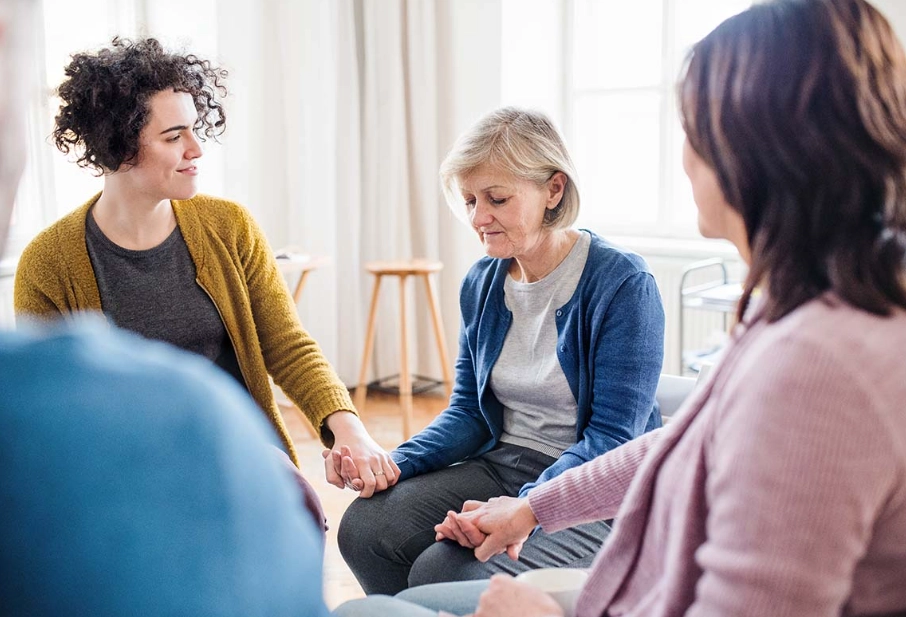
I remember first dipping my toes into the idea years ago, skeptical and more than a little nervous. The image in my head was all folding chairs and forced sharing. What I found was something entirely different. This guide is what I wish I'd had back then—a no-nonsense, practical look at how these groups actually work, how to find one that fits, and what you can really expect to get out of it.
Why Bother? The Tangible Power of Shared Experience
So, what's the big deal? Why would talking to strangers about your problems help more than talking to a close friend?
The magic isn't just in the talking. It's in the listening. It's in hearing someone articulate a fear or a struggle you thought was yours alone and realizing, with a visceral jolt, that you are understood. That shared understanding reduces shame in a way that one-on-one reassurance sometimes can't. A friend might say "don't feel bad," but a woman in a group who's been through the same thing can say "I know exactly why you feel that way, I did too," and the effect is completely different.
Beyond the emotional validation, which is huge, these groups are information hubs. Need a doctor who actually listens? A resource for financial aid? Tips for navigating a specific bureaucracy? The collective knowledge in a room (or a Zoom window) of women facing similar challenges is often more current and practical than anything you'll find on the first page of Google.
They also provide a unique form of accountability and hope. Seeing someone a few steps ahead of you in a similar journey—managing an illness, rebuilding after divorce, coping with an empty nest—offers a concrete vision of what resilience looks like. It's hope with a face and a story.
The Landscape: What Kinds of Support Groups for Women Are Out There?
The variety is vast, which is good news because it means there's likely a group aligned with your specific need. They generally break down in a couple of ways.
By Theme or Shared Experience
This is the most common way groups are organized. The connection is a specific life circumstance.
| Group Focus | What It's For | Example of What You Might Find |
|---|---|---|
| Health & Medical | Conditions like breast cancer, autoimmune diseases, chronic pain, fertility issues, menopause, postpartum depression. | Groups specifically for young women with breast cancer, or for managing lupus fatigue. Organizations like The American Cancer Society or Postpartum Support International often run or list these. |
| Mental & Emotional Wellbeing | Anxiety, depression, grief & loss, trauma recovery (e.g., PTSD from assault), eating disorders, ADHD in women. | Groups that focus on coping skills for anxiety attacks, or navigating grief that isn't socially recognized (like miscarriage). The National Alliance on Mental Illness (NAMI) offers many peer-led groups. |
| Life Transitions & Relationships | Divorce, widowhood, motherhood (new moms, single moms), empty nest, caregiving for aging parents. | Groups for women navigating the legal and emotional maze of divorce, or for daughters caring for parents with dementia. |
| Identity & Empowerment | Women in male-dominated fields, women of color, LGBTQ+ women, survivors of abuse, women in recovery (addiction). | Spaces to discuss unique challenges of sexism at work, racial microaggressions, or building a life after leaving an abusive partner. |
By Format and Structure
How the group runs is just as important as the topic.
Then there's the meeting style:
- Open vs. Closed: Open groups allow you to drop in anytime. Closed groups run for a set number of weeks with the same members, building deeper trust.
- In-Person, Online, or Hybrid: In-person offers that irreplaceable human energy. Online groups (via Zoom, dedicated forums, or even apps) offer incredible accessibility, especially for those in rural areas, with mobility issues, or with tight schedules. Some groups are hybrid.
- Discussion-Based vs. Skill-Building: Some are primarily for sharing and support. Others are more like workshops, teaching specific tools like mindfulness, communication skills, or distress tolerance.
So, you see, a "support group for women" could be a free, open, peer-led Zoom meeting for anxious moms, or a closed, 12-week, therapist-led in-person group for trauma survivors. Knowing these differences helps you search smarter.
Okay, I'm Interested. How Do I Actually Find One of These Groups?
This is where people often get stuck. It can feel like looking for a secret club. Here’s a step-by-step, practical approach.
Start with Trusted Organizations
For medical or specific condition-based groups, the major non-profit associated with that condition is your best starting point. Their information is vetted.
- For cancer support: American Cancer Society or specific organizations like Breastcancer.org.
- For mental health: NAMI, Anxiety and Depression Association of America (ADAA).
- For grief: Local hospice organizations almost always run grief support groups, often for free.
- For parenting/motherhood: Check hospitals, community centers, and organizations like MOPS International.

Use (But Don't Rely Solely On) Online Directories
Sites like Psychology Today's therapist finder have a "support groups" filter. It's a great tool, but listings can be outdated. Always call or email to confirm details.
Ask the Professionals in Your Life
Your doctor, therapist, or a hospital social worker is a goldmine for local referrals. They usually know which groups are active, well-run, and suited to different personalities.
Don't Underestimate Social Media and Community Boards
Search Facebook for private groups like "Women with [Condition] Support" or "[Your City] Women's Divorce Support." Nextdoor or local community center bulletin boards can have flyers for in-person groups. The key here is to assess the group's tone and moderation before fully engaging.
Consider the Growing World of App-Based and Forum Support
These aren't traditional real-time meetings, but they offer 24/7 peer connection. Platforms like 7 Cups offer chat-based support, while apps like Peanut connect moms. These are fantastic for quick check-ins and feeling connected between meetings, but they may not replace the depth of a live, facilitated conversation for core issues.
Choosing the Right Group: Your Personal Checklist
You've found a few possibilities. How do you pick? Think of it like trying on shoes. You need to see if they fit *you*.
- Listen to the Vibe: Most groups allow a trial session or a phone chat with the facilitator. Pay attention. Do the women seem supportive or competitive? Is there a sense of safety and respect? Does the facilitator manage the conversation well, ensuring no one dominates?
- Match the Format to Your Needs: If you're in crisis, a structured, professionally led group is likely safer. If you want flexible, ongoing support, an open peer group might work. If leaving home is hard, online is a blessing.
- Check the Practicalities: Cost? Schedule? Location or tech requirements? If it's a constant struggle to attend, you won't benefit.
- Trust Your Gut: If something feels "off"—maybe the philosophy doesn't align with yours, or the energy is negative—honor that. There are other groups. Your comfort and safety are non-negotiable.
I made the mistake of ignoring my gut once for a group that was geographically convenient. The facilitator's style was too confrontational for my taste at the time. I left feeling rattled, not supported. Lesson learned.
What Happens Now? Joining and Participating
You've chosen a group. The first meeting is looming, and the nerves are back. Totally standard.
First, contact the facilitator. A simple email: "Hi, I'm interested in your group for [topic]. Is it open to new members? Can I attend a session to see if it's a good fit?" This breaks the ice.
Go in with zero pressure to share. You can literally say, "I'd just like to listen tonight." Any good group will respect that. Your job is to observe. Do people listen without interrupting? Is there confidentiality? Is there a balance between sharing problems and discussing solutions?
As you get comfortable, you might share. Start small. The act of saying something out loud in a safe space is often the first step in loosening its grip on you.
Set boundaries for yourself. It's okay to mute or turn off your camera in an online group if you get overwhelmed. It's okay to step out of the room for a minute. This is *your* process.
Navigating the Unspoken Questions: Your FAQ
A Few Important Realities and Cautions
Let's keep it real. Support groups are a powerful tool, but they aren't magic and they aren't a substitute for professional healthcare.
A support group is not therapy. While therapeutic, it's not a replacement for one-on-one work with a qualified therapist for diagnosed mental health conditions, deep trauma, or acute crisis. Think of it as complementary—a circle of peers alongside the guidance of a professional. The American Psychological Association has great resources on understanding different types of mental health support.
Confidentiality is the bedrock. What's shared in the group must stay in the group. Any group that doesn't make this rule explicit from the start is a red flag.
You might hear stories that are triggering or more intense than your own experience. Have a self-care plan for after meetings—a walk, a cup of tea, journaling. A good facilitator will also help the group manage intense material.
Finally, know when to take a break or move on. If the group has served its purpose, if your needs have changed, or if you've outgrown it, it's okay to graduate. You can always return if needed, or take the courage you built there to find a new form of support.
The journey to find the right support group for women can feel daunting, but it's a search for one of the most fundamentally human things we need: to be seen and understood. It's about building a bridge over that feeling of isolation, one shared story at a time. You don't have to walk through your challenge alone, and you certainly don't have to figure out how to find your people alone, either. Start with one search, one email. The community is waiting.


Leave a comment