Let's cut to the chase. If you're searching for the single best osteoporosis drug, you're asking the wrong question. I've seen too many patients come in frustrated after scouring the internet, convinced there's a top-ranked winner. The reality is messier and more personal. The "best" medication for osteoporosis is the one that most effectively reduces your specific fracture risk while aligning with your health profile, lifestyle, and comfort level.
Think of it like this: asking for the best car. A family of five needs a minivan, a commuter wants a fuel-efficient hybrid, and an off-road enthusiast needs a truck. Your bones and your situation are unique.
This guide won't just list drugs. We'll walk through how the decision is actually made in a specialist's office. You'll learn the different classes of medications, their real-world pros and cons, and a framework for having a productive conversation with your doctor. By the end, you'll understand why the answer is rarely straightforward but always discoverable.
What You'll Find Inside
The Truth About ‘Best’: It's Personal, Not Universal
Osteoporosis treatment aims to do one primary thing: prevent broken bones (fractures). Every drug approved for this condition does that, but they take different roads to get there. Some slow down bone loss (antiresorptives). Others speed up bone building (anabolics). Your doctor's job is to match the road to your terrain.
Several key factors shift the balance:
Your Fracture Risk Score (FRAX): This is a big one. If your 10-year probability of a major fracture is very high, we might lean toward the stronger bone-building drugs first. If it's moderate, starting with a classic bone-preserver might be perfect.
Your T-Score: That number from your DXA scan. Severe osteoporosis (T-score below -2.5 with fractures) often calls for a different approach than osteopenia or mild osteoporosis.
Your Age and Health History: A 55-year-old with early menopause is different from an 80-year-old with kidney issues. Some drugs aren't recommended for certain age groups or if you have specific health conditions.
Your Preference for Dosing: This is more important than many doctors initially emphasize. A daily pill you might forget is worse than a quarterly infusion you'll actually get. Adherence is everything.
In my years of discussing this with patients, the fear of the unknown often outweighs the fear of the fracture itself. Let's demystify the tools we have.
Understanding Your Osteoporosis: The First Step
Before we talk drugs, you need to know what you're treating. Get a copy of your DXA scan report. Don't just accept "you have osteoporosis." Look for:
- T-score at the hip and spine: These are the most critical sites.
- FRAX Score: If it's not on the report, ask your doctor to calculate it. It uses your age, sex, weight, height, and other risk factors.
- History of fractures: Any broken bone after age 50, especially from a minor fall, is a major red flag.
This isn't just paperwork. It's the map that guides all treatment decisions. A patient named Sarah, 68, had a borderline T-score but a history of a wrist fracture from a slip on ice. That fracture history immediately pushed her into a higher-risk category, making medication a clear recommendation, not just an option.
The Medication Toolbox: A Detailed Comparison
Here’s a breakdown of the major drug classes. I'm including brand names because that's what people recognize, but the generic (chemical) name is what matters to your doctor and pharmacist.
>>Daily pill, patch, gel.| Drug Class (Type) | Common Brand Names | How It's Taken | The Big Advantage | The Trade-Offs & Considerations | Best For People Who... |
|---|---|---|---|---|---|
| Bisphosphonates (Antiresorptive) | Alendronate (Fosamax), Risedronate (Actonel), Ibandronate (Boniva), Zoledronic Acid (Reclast) | Weekly/monthly pill; Quarterly/yearly IV infusion | Longest track record (20+ years), proven to reduce spine & hip fractures, often generic & lower cost. | Pills have strict dosing rules (must take on empty stomach, stay upright). Rare risk of jaw problems or atypical thigh fractures with long-term use (>5 years). | Have postmenopausal osteoporosis, are good with routine (pills) or prefer infrequent dosing (IV), have moderate fracture risk. |
| RANK Ligand Inhibitor (Antiresorptive) | Denosumab (Prolia) | Injection under the skin every 6 months at a clinic. | Very powerful bone density increases, simple twice-yearly schedule, no stomach issues. | Must be given on schedule. If stopped without a follow-up drug, can cause rapid bone loss and high fracture risk. Slightly higher risk of serious infections. | Have severe osteoporosis, cannot tolerate bisphosphonates, want a potent non-pill option and commit to long-term treatment. |
| Anabolic (Bone-Building) Agents | Teriparatide (Forteo), Abaloparatide (Tymlos), Romosozumab (Evenity) | Daily self-injection (Forteo/Tymlos) for 18-24 months; Monthly clinic injections (Evenity) for 12 months. | They actually build new bone, leading to large and rapid density gains. Gold standard for highest fracture risk. | Cost is highest. Use is time-limited (18-24 months). Requires daily injections for some. Romosozumab has a boxed warning for heart risk. | Have very severe osteoporosis with multiple fractures, failed other treatments, need the strongest option available. |
| Selective Estrogen Receptor Modulator (SERM) | Raloxifene (Evista) | Daily pill. | Also reduces risk of certain breast cancers. | Increases hot flashes and leg cramp risk. Slightly increases blood clot risk. Only reduces spine fractures, not hip. | Have osteopenia or mild spine osteoporosis and a significant family history of breast cancer. |
| Hormone Therapy | Various Estrogen/Progestin products | Effective for bone and menopausal symptoms. | Increased risks of blood clots, stroke, and breast cancer with long-term use. | Recently menopausal women with significant symptoms, generally under 60, for short-term use. |
See how context changes everything? The "best" shifts dramatically from column to column based on the person sitting across from me.
A Hidden Gem: The Infusion Option
Zoledronic acid (Reclast) gets less buzz than the daily pills, but I've found it to be a game-changer for many. One 15-minute IV drip once a year. No stomach rules, no forgetting pills. For busy people or those with GI sensitivities, it's often the most effective choice because they actually get the full dose. The downside? Some people get flu-like symptoms for a couple of days after the first infusion. It's a trade-off, but for the right person, it's an excellent one.
How to Decide: A Step-by-Step Framework
Don't walk into your doctor's appointment unprepared. Use this framework to guide the conversation.
Step 1: Bring Your Data. Your DXA report, FRAX score (ask for it), and a list of all your medications and supplements.
Step 2: Define Your Top Priority. Is it maximum fracture reduction no matter what? Is it avoiding daily pills? Is it the lowest possible cost?
Step 3: Discuss the “Big Fear.” Be honest. Is it jaw osteonecrosis? Heart side effects? Needles? Your doctor can give you real-world stats on those risks.
Step 4: Plan the Follow-up, Not Just the Start. Ask: "If this first choice doesn't agree with me or isn't working well enough, what's our Plan B?" Treatment is often a sequence, not a one-time choice.
A common mistake is focusing only on starting therapy. Equally important is the plan for monitoring (repeat DXA in 1-2 years) and knowing when or if to take a "drug holiday"—a concept mainly for bisphosphonates after 3-5 years of use.
Beyond the Pill: The Non-Negotiables
This is where I see the biggest gap in online advice. No medication works in a vacuum. If you take the strongest bone-builder but live on soda, avoid sunlight, and never move, you're sabotaging your treatment.
Nutrition is foundational, not optional. Aim for 1,200 mg of calcium daily from food first (dairy, leafy greens, fortified foods). A supplement can fill the gap. Vitamin D3 (1,000-2,000 IU daily for most adults) is critical for absorption. Get your blood level checked; aiming for 30-50 ng/mL is the sweet spot.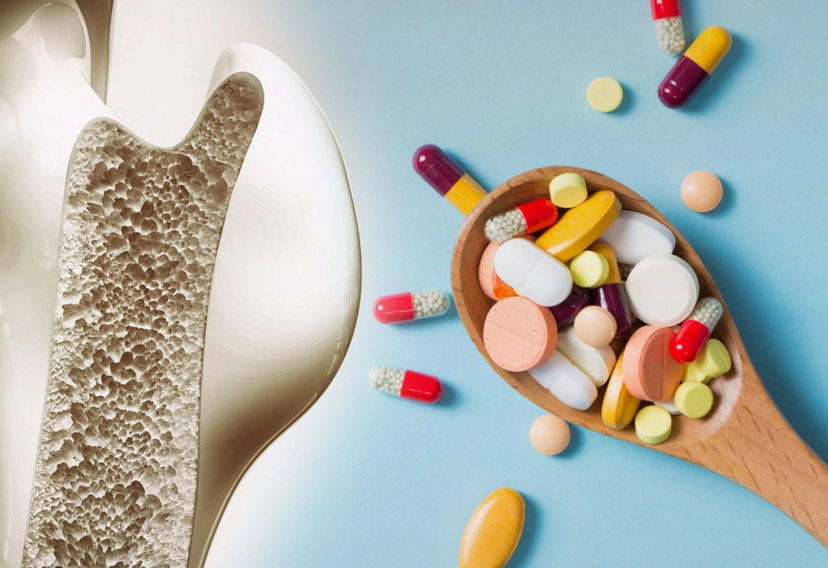
Exercise is non-negotiable medicine. Not just walking. You need weight-bearing exercise (walking, jogging, dancing) and muscle-strengthening exercise (lifting weights, resistance bands). The force of muscle pulling on bone is what tells it to stay strong. A physical therapist familiar with osteoporosis can design a safe, effective program, especially if you already have spinal fractures or fear falling.
Fall prevention is treatment. Clear clutter, secure rugs, install grab bars in the bathroom, wear supportive shoes. Review your medications with a pharmacist—some common drugs for sleep or blood pressure can increase dizziness and fall risk.
Common Questions Answered (From a Different Angle)
I'm terrified of the side effects I read about online. Should I just avoid medication?
Let's put risk in perspective. The risk of a hip fracture for someone with osteoporosis is about 1 in 6 over their lifetime. The consequences are severe: loss of independence, chronic pain, even increased mortality. The risk of the most feared side effect, osteonecrosis of the jaw, is estimated to be between 1 in 10,000 to 1 in 100,000 for people on osteoporosis drugs, and it's mostly associated with high-dose IV bisphosphonates for cancer, not standard osteoporosis doses. The math heavily favors treatment for those at significant fracture risk. Fear of a rare side effect shouldn't condemn you to a likely fracture.
My doctor prescribed a bisphosphonate, but I keep forgetting to take it correctly (empty stomach, upright). Am I wasting it?
Probably. Poor adherence is the number one reason these drugs "don't work." If you take it with food or lie down too soon, you might absorb less than 1% of the dose. Tell your doctor this is happening. It's not a failure on your part; it's a mismatch between the treatment and your life. This is the perfect reason to switch to a quarterly or yearly infusion or a different class of drug altogether. A treatment you can't follow is the wrong treatment.
I took Fosamax for 5 years. My doctor says I can stop. Won't my bones just get bad again?
This is the concept of a "drug holiday." Bisphosphonates get stored in the bone and keep working for months or years after you stop. For many people at lower risk after initial treatment, taking a break of 1-2 years while monitoring bone density is a standard, evidence-based practice. It reduces potential long-term risks while maintaining benefit. The key is you must be monitored—you don't just stop and disappear. The strategy is different for drugs like Prolia (denosumab), where stopping without a follow-on drug is strongly discouraged.
Are the new bone-building drugs (like Tymlos) worth the high cost and hassle of daily injections?
For the right person, absolutely. If you have severe osteoporosis with multiple fractures, the 40-50% reduction in vertebral fracture risk these drugs offer over a potent antiresorptive like Prolia can be life-changing. The hassle of a daily injection for 18 months to avoid being hunched over in pain from a new spine fracture? Most of my patients in that situation say it's a no-brainer. Insurance approval can be a battle, but for high-risk cases, it's a battle worth fighting.
The journey to stronger bones is more of a marathon than a sprint. It combines smart medication choices with relentless attention to the basics: nutrition, exercise, and safety. There is no single champion drug, but there is a champion strategy—one built around you, your body, and your life. Bring this knowledge to your next doctor's visit. It will transform the conversation from "What should I take?" to "Here's what makes sense for me."



Leave a comment