Quick Navigation
Let's be honest. Waking up with a neck that feels like it's made of concrete, or spending your afternoon with a dull ache that just won't quit, is the worst. It ruins your focus, kills your mood, and makes simple things like checking your blind spot while driving a genuine chore. You're not alone. I've been there too—staring at a screen for hours, only to realize my shoulders are up by my ears and my neck is screaming. And you know what? Most of the quick fixes you find online are... well, kind of disappointing. A few generic stretches, the advice to "sit up straight," and that's it.
But real, lasting neck pain relief isn't about one magic trick. It's about understanding the why behind the pain and having a toolbox of strategies you can actually use. That's what this guide is for. We're going to move past the fluff and talk about what helps, what doesn't, and when you need to stop Googling and start dialing your doctor.
Why Does My Neck Hurt in the First Place?
Before we jump into fixes, it helps to know what you're dealing with. Neck pain isn't one single thing. It's a symptom with a bunch of possible causes.
The most common culprit by far is what doctors call "mechanical" or "non-specific" neck pain. This is fancy talk for pain coming from the muscles, ligaments, joints, and nerves in your neck due to strain or poor posture. Think of it like this: your head weighs about 10-12 pounds, roughly the weight of a bowling ball. Your neck muscles are the cradle holding it up. Now, tilt that bowling ball forward 60 degrees to look at your phone. Suddenly, the effective weight on your neck skyrockets to around 60 pounds, according to research published in Surgical Technology International. Your poor neck muscles aren't designed for that marathon.
Other common reasons include:
- Muscle Strains: Overuse (hello, weekend warriors), sleeping in a weird position, or a sudden jerk.
- Worn Joints: Just like knees and hips, the facet joints in your neck can develop osteoarthritis over time.
- Nerve Compression: Herniated discs or bone spurs can pinch the nerves branching out from your spinal cord, causing pain that might shoot down your arm.
- Injuries: Whiplash from a car accident is a classic, and often delayed, cause of chronic neck issues.
See what I mean? A one-size-fits-all approach to neck pain relief doesn't make sense because the root cause can be so different.
First Aid for Your Aching Neck: Immediate Relief Tactics
Okay, you're in pain right now. What can you do today to feel better? Let's talk about the first-line defense.
Gentle movement is almost always better than complete rest. I know you want to freeze in place, but that can make stiffness worse. Try slow, controlled movements—looking slowly left and right, tilting your ear toward each shoulder, and gently rolling your shoulders. Don't push into sharp pain. The goal is to remind your muscles and joints they can still move.
Over-the-counter pain relievers like ibuprofen (Advil) or naproxen (Aleve) can help reduce inflammation and break the pain-spasm cycle. Acetaminophen (Tylenol) can help with the pain itself. But here's my personal take: these are bandaids. They're great for getting you through a bad day, but they don't fix the problem. Relying on them long-term isn't a strategy for neck pain relief; it's a strategy for managing symptoms while the real issue gets worse.
And posture? Yeah, it matters. But telling someone with neck pain to "sit up straight" is about as useful as telling a sad person to "cheer up." It's not actionable. Instead, try this: set a timer for every 30 minutes. When it goes off, do a quick posture check. Are your shoulders hunched? Is your chin jutting forward? Reset. Shrug your shoulders up to your ears, roll them back and down, and gently tuck your chin in like you're making a double chin. Hold for 5 seconds, release. It's a tiny reset button for your posture.
Building Your Long-Term Neck Pain Relief Toolkit
This is where you go from putting out fires to building a fireproof house. Lasting relief comes from habits and strengthening.
1. The Ergonomic Overhaul (It's Not Just About Your Chair)
If you work at a desk, your setup is probably working against you. The American Chiropractic Association has tons of good info on this, but let's simplify.
Your monitor should be at arm's length away, with the top of the screen at or slightly below eye level. If you're looking down at a laptop all day, you're asking for trouble. Get a stand, or use some sturdy books. Your keyboard and mouse should allow your elbows to stay close to your body at a 90-120 degree angle. Your feet should be flat on the floor.
But here's the secret nobody talks about: the perfect ergonomic setup won't save you if you sit in it like a statue for 8 hours. The best posture is your next posture. Shift, stand, stretch, lean back. Movement is key.
2. Stretching and Strengthening: The Non-Negotiable Duo
Weak muscles get tired and hurt. Tight muscles pull joints out of alignment and hurt. You need to address both.
Key Stretches for Tightness:
- Levator Scapulae Stretch: This muscle, connecting your neck to your shoulder blade, is a prime suspect. Sit tall, gently tilt your head forward and to the right (like smelling your armpit). Add gentle pressure with your right hand. Hold for 30 seconds. Repeat on the left.
- Upper Trapezius Stretch: Sit tall, gently pull your head, bringing your left ear toward your left shoulder until you feel a stretch on the right side. Hold. Switch sides.
- Chin Tucks: The king of neck exercises. Sitting or standing tall, gently retract your chin straight back, creating a "double chin." Hold for 5-10 seconds, release. Do 10-15 reps, several times a day. This strengthens the deep neck flexors that counterbalance our forward-head posture.
Key Strengthening Exercises:
Weakness in your upper back and shoulder stabilizers forces your neck muscles to overwork. The National Institute of Neurological Disorders and Stroke (NINDS) notes the importance of exercise in managing neck pain. Try these:
- Rows (with a resistance band or light weight): Strengthens the muscles between your shoulder blades, pulling your shoulders back.
- Prone Ys and Ts: Lie on your stomach on the floor or bed, arms extended in a Y or T shape. Gently lift your arms a few inches off the ground, squeezing your shoulder blades. This is brutal but excellent for posture.
- Isometric Holds: Place your palm against your forehead and gently push your head forward while resisting with your neck muscles (no movement should occur). Hold for 5-10 seconds. Repeat pushing against the side and back of your head.

3. The Lifestyle Stuff That Actually Matters
Stress is a huge, often ignored, factor. When you're stressed, you tense up. Your shoulders rise, your jaw clenches, and your neck muscles turn into rocks. Mindfulness, deep breathing (seriously, try the 4-7-8 technique), or even just taking a walk can lower your overall tension load.
Sleep position is another biggie. Stomach sleeping is the worst for your neck—it forces you to rotate your head for hours. Back sleeping is best, with a supportive pillow that keeps your neck aligned with your spine. Side sleepers need a pillow that fills the space between the ear and shoulder to keep the spine straight. I went through a pillow-purgatory phase. Memory foam worked better for me than down, but it's highly personal.
When to Seek Professional Help for Neck Pain Relief
This is crucial. Home care is powerful, but it has its limits. You should definitely see a doctor or physical therapist if:
- The pain is severe or getting progressively worse.
- It follows an injury like a fall or car accident.
- You have numbness, tingling, or weakness in your arms or hands.
- The pain is accompanied by a headache, fever, or unexplained weight loss.
- Your home efforts aren't making a dent after a couple of weeks.
What can a professional offer? A lot more than you think.
Physical Therapy (PT): This is often the gold standard for mechanical neck pain. A good PT won't just give you generic exercises. They'll assess your specific movement patterns, pinpoint weak or tight areas you'd never find on your own, and give you a tailored program. They might use manual therapy, dry needling, or specific modalities to jumpstart your recovery. The American Physical Therapy Association's guide to neck pain is a great resource to understand what PT can do.
Chiropractic Care: Spinal manipulation can provide relief for some types of joint-related neck pain. The evidence is mixed, but many people swear by it for acute flare-ups. My advice? If you try it, go to someone who also emphasizes rehabilitation and exercise, not just adjustments.
Other Options: Massage therapy can be fantastic for releasing muscle tension. Acupuncture has shown some promise for pain relief for certain individuals, as noted in reviews by institutions like the National Center for Complementary and Integrative Health.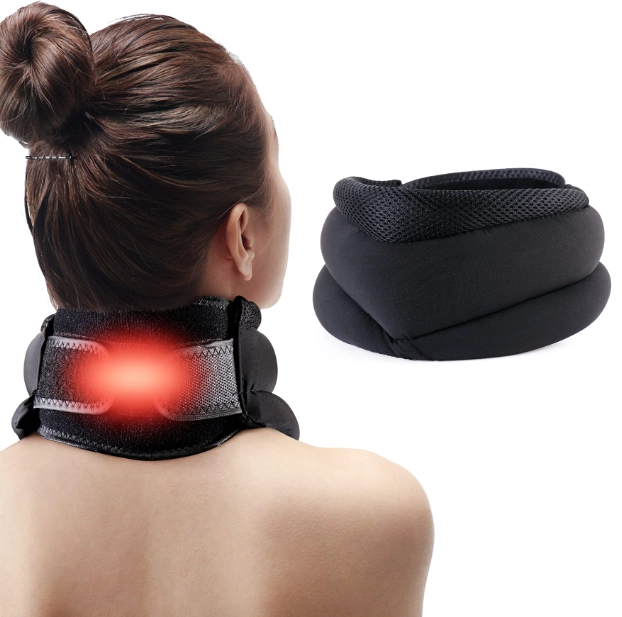
The goal of professional help isn't just to make the pain go away for a day. It's to give you the knowledge and tools to manage it yourself for the long haul. A good practitioner makes themselves obsolete.
Your Neck Pain Relief Questions, Answered
Is cracking my neck bad for me?
It depends. The occasional, gentle self-crack that happens with a stretch? Probably fine for most people. The forceful, twisting "I-need-to-pop-it" maneuver you do multiple times a day? That's a bad habit. You're manipulating joints that are already irritated. It might give momentary relief by releasing gas from the joint fluid (cavitation), but it does nothing to address the underlying stiffness or weakness and can potentially lead to hypermobility or irritation over time. Let a professional handle the adjustments if needed.
What's the best pillow for neck pain?
The one that works for you. I hate that answer, but it's true. Your sleep position, body size, and personal preference are huge factors. Generally, look for a pillow that keeps your head in a neutral alignment with your spine. For side sleepers, this means a firmer, higher pillow. For back sleepers, a medium loft with some support under the neck. Memory foam or latex pillows that contour can be good. Shredded foam allows you to adjust the height. I'd suggest reading reviews from people with similar sleep habits, but be prepared for some trial and error. Don't be afraid to return a pillow if it doesn't work.
Can stress really cause this much neck pain?
Absolutely, 100%. It's not "all in your head." It's in your muscles. Chronic stress triggers the "fight or flight" response, which includes muscle tension—especially in the neck, shoulders, and jaw. This creates a vicious cycle: stress causes tension, tension causes pain, pain causes more stress. Breaking that cycle through relaxation techniques is a legitimate and powerful form of neck pain relief.
Are there any gadgets worth buying?
The market is flooded with them: percussion massagers, TENS units, infrared wraps, posture correctors. Some can be helpful tools in your toolkit, but none are magic cures.
| Gadget | Potential Benefit | The Reality Check |
|---|---|---|
| Percussion Massager (Theragun, etc.) | Can help release superficial muscle knots and trigger points. | It's a temporary fix. If your muscles keep getting knotted, you need to address the cause (posture, weakness). Don't use it directly on the spine. |
| TENS Unit | Uses electrical pulses to interfere with pain signals. Can provide temporary relief during flare-ups. | It masks pain; it doesn't heal anything. Useful for acute episodes but not a long-term solution. |
| Posture Corrector Braces | Can provide sensory feedback to remind you to sit/stand tall. | They can make your core and back muscles weaker if you rely on them constantly. Use them as a reminder, not a crutch. |
| Heated Neck Wrap | Excellent for relaxing stiff, achy muscles before stretching or bed. | Probably one of the most cost-effective and useful tools for chronic stiffness. No major downsides. |
My take? A simple heating pad and a good foam roller for your upper back are better investments than most expensive gadgets.
Putting It All Together: A Realistic Plan
Feeling overwhelmed? Don't be. You don't have to do everything at once. Lasting neck pain relief is a marathon, not a sprint.
Start with the first-aid section if you're in acute pain. Get the inflammation down. Then, pick one thing from the long-term toolkit to focus on this week. Maybe it's setting up your desk ergonomics. Maybe it's doing chin tucks twice a day. Maybe it's just committing to that 30-minute posture timer. Master that one thing.
Next week, add another. Maybe start the levator scapulae stretch. The week after, try a simple row exercise with a resistance band. Build your habits slowly. Consistency with a few key things is infinitely better than doing 30 exercises once and burning out.
Listen to your body. Some days you'll need more rest, some days more movement. The goal is to become the expert on your own neck. You'll learn what triggers a flare-up (maybe it's that long car ride or a particularly stressful work meeting) and what helps settle it down.
Neck pain can be stubborn and frustrating. But it's also very often manageable. By combining smart immediate care with a committed, patient approach to strengthening and habit change, you can find real relief and get back to living without that constant ache. You've got this.






Leave a comment